
finding solidarity in the frictions of public life
cramped-up-sticky strategies from disabled people for sharing space

Much of the time I’m doing mental maths. Arithmetic and probability equations spawned by my fluctuating chronic fatigue. On this particular day, I decided to forgo the pricey-in-terms-of-money but less-pricey-energetically taxi ride and queue for the bus.
On boarding the bus, I sported my blue ‘Please offer me a seat’ badge. Bat-signalling “hey I’m not as look Young and Fit™️as meets the eye.”
I discovered the priority area for wheelchair users and pushchairs was at full capacity, and the priority seats that I needed nearby were acting as overflow stowage for bags. All the other seats were occupied. The wheelchair user and her companion noticed my badge. They spoke to each other about moving stuff off the seats and figured out a way I could sit too. We moved stuff around, the two of them didn’t lose their space and I got a seat.
At the next stop, another passenger came on, she gestured to her wearable medical device and explained that she too needed to sit. She insisted I didn’t give up my seat. Between us we figured out a configuration that allowed us all space. We sat and chatted, she told me about her struggles in the heat, how moving about with the device was difficult, and her upcoming graduation and travel plans. She told me she plans to study something in the medical field, she said once you’ve been through the NHS’s policies, you’re better set up to help others.
Next to us, parents negotiated space to fit two pushchairs. There wasn’t quite enough space. Legally, and for safety reasons, wheelchair users have priority over buggies for designated wheelchair space on public transport. But the legality wasn’t a part of the conversation, there was more of a sensed understanding of needs and mobility. The mum lugged a toddler on one hip and a folded pushchair a three bags on the other upstairs, to join her partner who’d already taken their other child up. It is possible that she needed some help, though none of us who were using priority spaces for disabled people were able to help. At that point we - and the parents - were the ones locked into actively paying attention to other people’s needs.
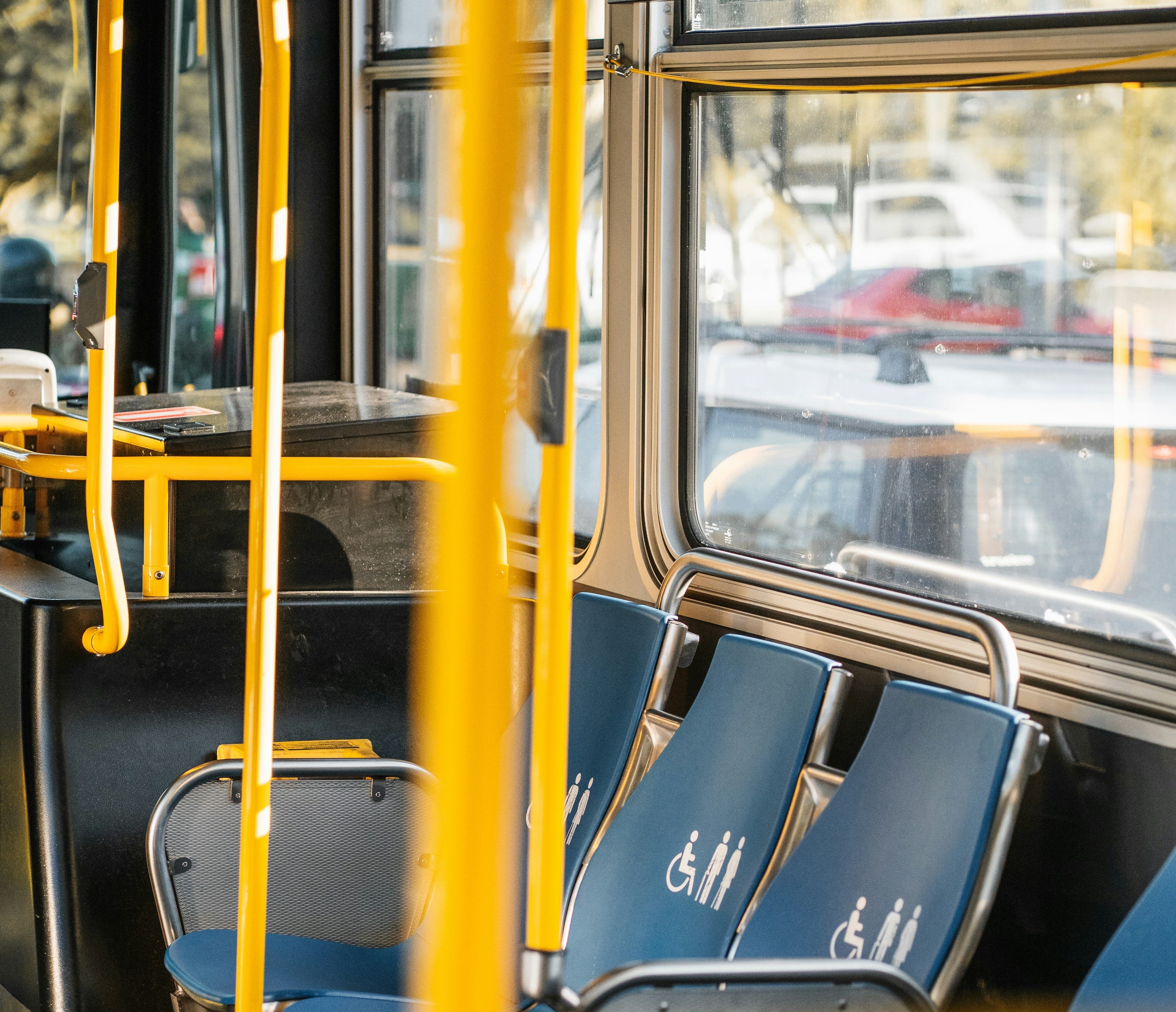
Temporarily thrown together, hurtling in the same direction but with slightly different destinations, did our best to find something that worked just about. There was no top-down instruction from the driver. We weren’t governed by some mandated set of rules. The organising force of our brief shared space was negotiation of needs. Self-advocacy, empathy and an attentive approach.
From the looks of the faces of some of the other people on the bus, some seemed to imagine, I think, that we were a ragtag chaotic group, getting in the way. I often baulk at how embarrassing some people find disability. How shameful they find their own weaknesses, how they struggle in asking for help. (My grandmother in her 80s refused offers for seats and then would near-topple over at each sharp turn of the bus. She didn’t want to look old, read: she didn’t want to look disabled.) It makes me sad that sitting down could carry so much shame.
The spur of the moment negotiations on the bus created friction. When I have been more well in the past, I glide through the world with relative ease. I think this part of what people mean when they talk about privilege. Privilege is friction-less-ness. When I was well, things would go smoothly I didn’t have to think about whether I’d get a seat, or deal with the pain or exhaustion of standing. I would move through the corridor of a bus without a second thought. Get off with a spring in my step.
On this bus, it was another disabled person who noticed my needs, in turn I noticed the needs of the others. We spoke with the parents, who spoke with each other to figure out the configuration of the buggies. Ideally, there would have been more space, but we did our best within the space we needed, a cycle of looking out for each other. Within the context of the scarcity of space on a public bus, there was solidarity.
It was a hot day, I fanned myself with a flyer that the local cardiganed missionaries - who’d asked me to mend my ways during the Pride parade - had shoved into my hands. The wheelchair user told me she had left her fan at home. I told her my old one had snapped recently. We all started talking about how we manage in this heat with our conditions. A quick intimacy struck up because of the way we’d had to negotiate our needs together.
On a bigger-bus-scale, many of us are aware that we need to reckon with the climate crisis at a global scale. This heat wave after wave after wave shows us the ripple effects of what happens when public infrastructure is undermined, outsourced and neglected. When the ‘commons’ are privatised. When private buildings for financial gain are invested in more than public infrastructure for people’s needs. Burning and tearing up land, livelihoods, and liberation along lines of continuing global inequity, racism and colonialisation. Our bus in Oxford trundled past the sites where many of the decisions that contribute to the crisis we now face, were made.
In my day to day life, I have noticed that people who may have never considered accessibility before, are talking about how they need things that will help them cool down. They feel they cannot safely work in these conditions, it’s bad for their health. Maybe it would be good to have air conditioning, shaded buildings, naps, afternoon breaks, shorter working days. And they’re not wrong. These are the sorts of conditions workers worldwide have been unionising and fighting for decades.
Under one frame, the need to be at a safe temperature could be read as an accessibility need. In the literal sense that you need these conditions in order to enter and safely remain in a space or activity. It becomes apparent that a space isn’t accessible when your body struggles to be in it. That is often how it can feel to be disabled in inaccessible spaces. Only, unlike the heat, not everyone feels the friction so much as a disabled person might when their needs aren’t met, so it isn’t always believed and acted upon.
When your needs are being met, you don’t have to think about them much. But when the environment isn’t designed for your bodymind, you have to constantly do mental maths.
This bus journey had me thinking about different kinds of calculations. Whether we like it or not, we get forced to be designers. Insofar as we can - in the words of the authors of Pirate Care - we have to ‘tinker’ with tech and infrastructure to make it work for us. Chronically Jenni shares how often things disabled people have led the charge in making things accessible, and in doing so, it’s ended up benefitting a much wider group too. Examples include electric toothbrushes, velcro straps, automatic doors, subtitles and so on.
Whilst we navigate austerity in public resources, the impact of the climate crisis and inaccessibility it is important that we all stay attentive to one another whilst in public.
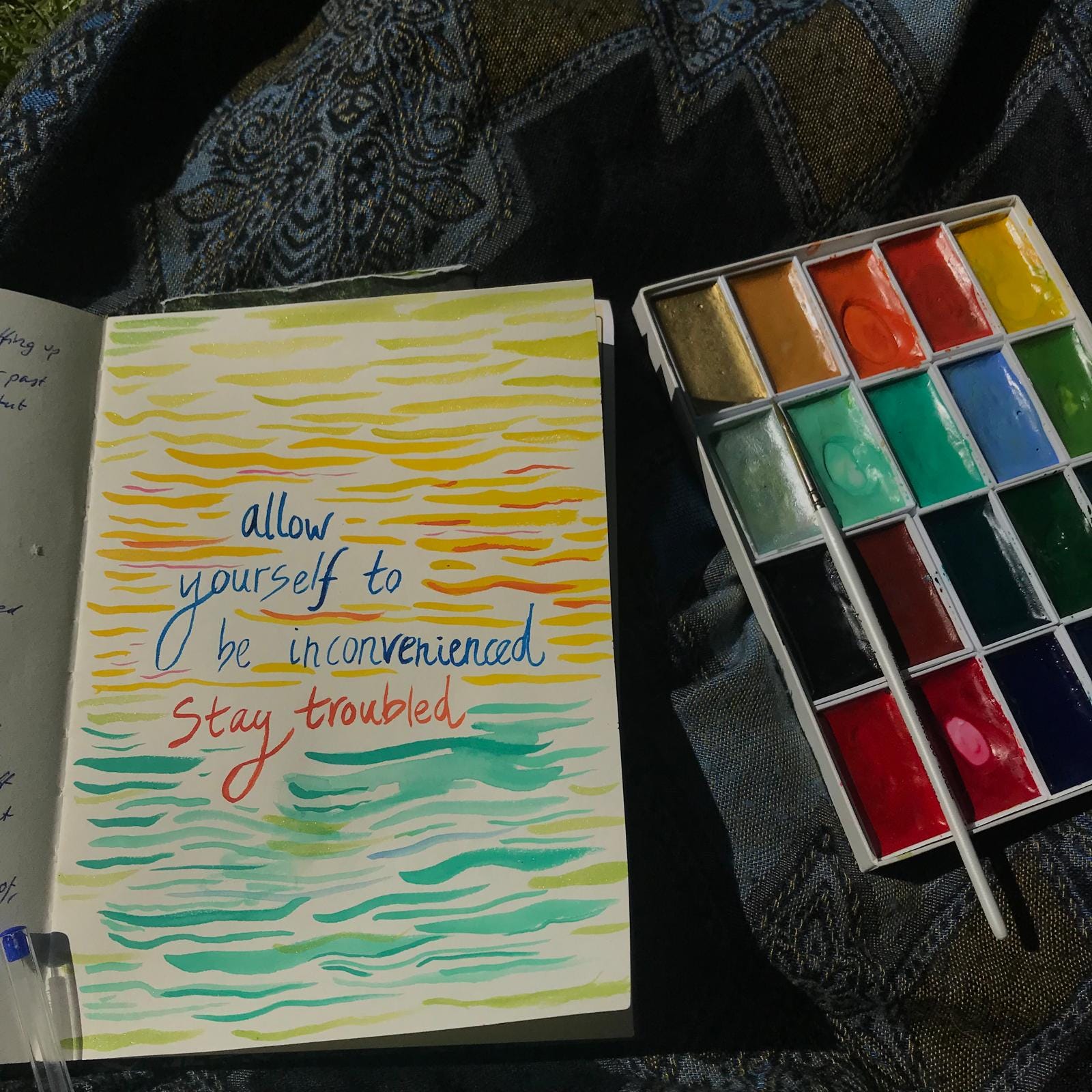
It isn’t always easy or even possible to be in public, let alone be active in public, especially if you’re actively excluded. I do not fault anyone who needs private or personal transportation to meet their own accessibility needs. (I get it: I often have to get taxis because of severe energy limitations that make navigating buses too difficult.) Living on low or poverty incomes, as many disabled people do, means you do not always get the option of optimised travel. We are perhaps more acutely aware of the friction of inaccessible or limited options.
But all of us - disabled or not (yet) disabled - are increasingly encouraged to make our lives as smoooooth as possible. By smooth I’m not talking about accessiblity (of course we should aim for reducing friction for disabled people), I’m talking about designing out of life any conflicts or human interactions that may feel a little tricky at times.
Public ‘third spaces’, especially ones where the membership is fleeting - like public transport- are a constant navigation. (To be clear, I am not just talking about buses - it is okay if you can’t or don’t want to go on buses. I’m talking about all public spaces and community dynamics.) We are encouraged to opt out of these sorts of tensions and negotiations that happen in public, in the name of protecting the steady self and the family above all else. We are encouraged to stick to ‘our own’. It can feel, and sometimes is safer, to shut off to those around us. But often, safety is not at risk and yet we still are encouraged to make everything as convenient as possible. This idea has material consequences as places where people can gather in community are far and few behind and aren’t suited to our needs.
A conseqence of seeking a frictionless life is not noticing the needs of people around us. Being a person in public1 requires attention for better and for worse, in sickness and in health. There’s a fine line here in not tipping into hyper-vigilance. There’s a different between the vigilance one is forced to have if you’re harassed, overly-visiblised, invisiblised, excluded in public; and looking up, listening out for other people in solidarity. This line is complex, often those most target to violence in public are more attuned to others’ needs.
Where possible, if we are resourced - and importantly, not alone - we can practice attentive participation in public spaces. It is a learnable skill, each of us bringing what we can to it, and taking what we need from it. As with all skills, without resource, support and collective efforts, it dies before it can grow.
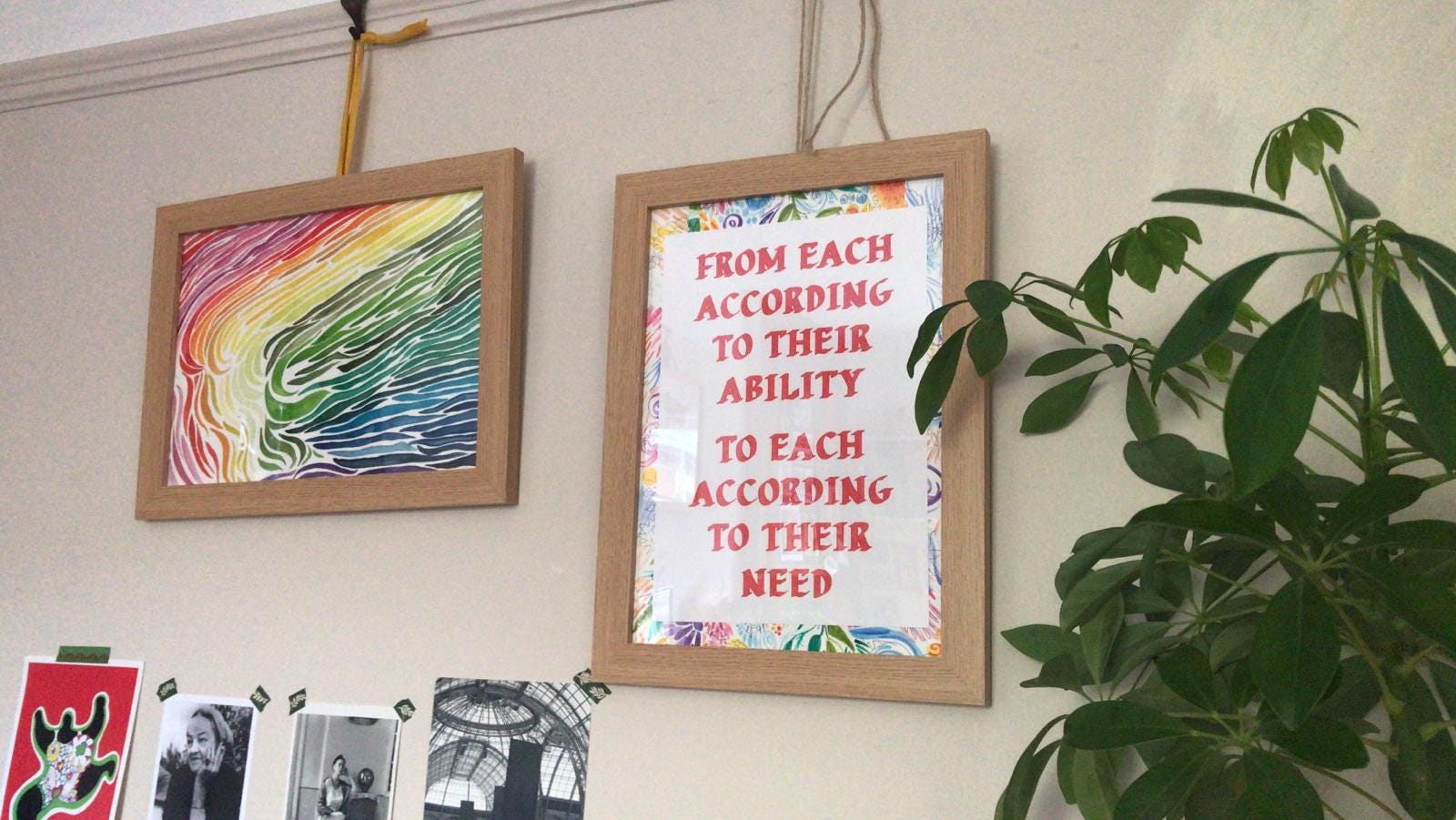
Of course, we must act from each according to their abilities, to each according to their means. As the old saying goes, you cannot draw from an empty well. And yet - we cannot fill that well without communal efforts. One of the frustrating overcorrections of much of online/ therapy-informed discourse is this idea that supporting others is always innately depleting. An overcorrection which understandably attempts to settle the disproportionate ways some people support others whilst others do very little to contribute to the care of others. But an overcorrection that I think sometimes erases the unavoidable fact that there is friction and discomfort in public life. An overcorrection which flattens what it is to be a collaboration orientated species, who is currently forced to live through the imagination and economic systems of those who believe that human nature is domination and violence.
With the right strategies, participating in public negotiation of shared resources can be enlivening. We are not rescuing each other, we are not people-pleasers, we are instead people who are attentive to each other. Solidarity can be very good for us. That’s because solidarity is a relationship that is bi-tri-many-directional. It is not a relationship of pure giving - it is a relationship of common struggle against challenge and for a better future. It can be a love based on giving and receiving as well as having and sharing. With solidarity, we zigzag around, hurtling forward together, stopping to gather more passengers for the ride. We recalculate both how we travel and path itself.
In the spirit of solidarity, a member of my community needs support. If you have any change to spare, please consider donating to their crowd-funder (Subscribers: your subscription fees for this month have already been sent their way)
Care Curriculum Reading Accompaniments:
Lately I’ve read:
Pirate Care: Acts Against the Criminalization of Solidarity by Marcell Mars, Tomislav Medak, and Valeria Graziano
This short book is a thoughtful pragmatic framework and set of examples of people tinkering with technologies and creating alternatives to resist the fascist criminalisation of care. I found it deeply hopeful.
The Caregiver by Samuel Park This novel was left in the house I was staying in on holiday, and felt like a serendipitous companion to the non-fiction of Pirate Care.
I’ve been trying to shift my algorithm towards learning from those working in the UK, so I can learn from them for my own local work, which lead me to the work of Amahra Spence who writes here on Substack. I appreciated this article: Don’t Despair: Participate.
If you’re interested in what I’m working on when I’m not on the bus:
A participatory research project with ‘care workers’ and ‘care users’ in Oxfordshire, to imagine and design a Care Co-operative - that is a business owned by its members. I wrote about it for the Stir to Action magazine.
Campaigning with Turn2us, including a recent event in parliament where we put MPs through an immersive Jobcentre Experience to campaign for Jobcentres to lead with trust, not suspicion.
Not just in public, in personal relationships too! the personal is political, don’t cha know!
Hey Rachel, so interesting. I have been that parent with the pushchair and a thousand bags many times, and the experience has been eye-opening for me. I'm ashamed to say that prior to having kids, I genuinely didn't notice this issue. It was only once I personally began to wrestle with broken lifts / railway bridges / gridlock in the bus buggy space that I began to think 'whoa, what about the wheelchairs etc'? And also I've noticed that sense of solidarity, among anyone having what you might call a non-normative experience. Very funny about Grandma Helen (I'm assuming!) by the way x